What Is a Curtain Wall? Types, Common Problems and Maintenance
Short answer: a curtain wall is an outer wall of a building, usually made of glass and aluminium, that is hung from the structure rather than holding it up. It carries only its own weight and the wind loads on it, and passes them to the floor slabs. Its job is to keep out weather, control heat and light, and give the building its look.
Most towers in Dubai Marina, Business Bay, DIFC and along Sheikh Zayed Road are wrapped in curtain walls. From the street they look like one smooth surface of glass, but each one is a system of hundreds of components that have to work together for decades in heat, sand and wind.
Why it is called a curtain wall
The name comes from the way it hangs. Like a curtain on a rail, the wall is fixed to the building at each floor and hangs in front of the structure. Because it does not carry floors or columns, it can be thin, light and mostly glass. That is different from a load-bearing wall, such as a block wall in a villa, which supports the building above it.
Main parts of a curtain wall
| Component | What it does |
|---|---|
| Mullions | Vertical aluminium members that carry the glass and transfer loads to the slab |
| Transoms | Horizontal members between mullions |
| Glass (vision and spandrel) | Vision glass you see through; spandrel panels hide slab edges and services |
| Anchors and brackets | Fix the wall to each floor slab and allow adjustment and movement |
| Gaskets | Rubber seals between glass and frame |
| Structural silicone | Bonds glass to frames on structurally glazed systems |
| Weather sealant | Seals joints against water and air |
| Drainage and weep holes | Let any water that gets in escape to the outside |
| Fire stopping | Seals the gap between slab edge and facade to slow fire and smoke spread |
Main types of curtain wall
| Type | How it is built | Where you see it |
|---|---|---|
| Stick system | Frames assembled piece by piece on site, then glazed | Low and mid-rise buildings, podiums |
| Unitised system | Large factory-made panels hung floor by floor | Most modern towers |
| Structural glazing | Glass bonded with structural silicone, no visible outer caps | Sleek modern facades |
| Point-fixed (spider) glazing | Glass held by stainless steel fittings at its corners | Lobbies, atriums, canopies |
| Double-skin facade | Two layers of glass with a ventilated cavity | Some landmark and energy-focused buildings |
Curtain wall vs window wall
A window wall sits between floor slabs and is supported by each slab, so the slab edge is visible from outside or covered separately. A curtain wall runs continuously past the slabs. Window walls are common in residential towers because they are simpler and cheaper; curtain walls are common in offices and landmark buildings.
Common curtain wall problems
- Water leaks at joints, corners and failed sealant, often showing as stains on ceilings or carpets near the facade
- Fogged double glazed units when edge seals fail
- Shrinking or missing gaskets, especially on sun-facing elevations
- Cracked glass from thermal stress, impact or rare spontaneous breakage
- Blocked drainage from sand and debris
- Air and dust leakage that makes the AC work harder
- Corrosion of fixings in coastal areas
Why Dubai’s climate is hard on curtain walls
Surfaces in direct summer sun get much hotter than the air, while the inside stays air-conditioned. That temperature difference stresses glass and seals every day. Aluminium expands and contracts, joints move, and UV slowly hardens sealants and gaskets. Sand gets into drainage paths. None of this causes sudden failure in a well-built system, but it makes regular maintenance more important than in milder climates.
How to maintain a curtain wall
| Task | Typical frequency |
|---|---|
| Glass and frame cleaning | Every 1 to 3 months |
| Visual inspection during cleaning | Every cleaning visit |
| Close-up inspection of sealant, gaskets and fixings | Yearly on exposed elevations |
| Drainage check and clearing | Yearly, and after major dust storms |
| Re-sealing failed joints | As found, before leaks spread |
| Replacement of fogged or cracked units | As required |
Our team provides curtain wall maintenance including gasket and sealant renewal, facade glass replacement, and facade cleaning for glass towers across Dubai.
Questions people ask about curtain walls
Is a curtain wall the same as a glass facade?
Most glass facades on tall buildings are curtain walls, but a glass facade can also be a window wall or a point-fixed system. “Curtain wall” describes how it is hung, not just the material.
Can a curtain wall be made of materials other than glass?
Yes. Spandrel areas can be aluminium, stone, terracotta or other panels within the same framing system.
How long does a curtain wall last?
The aluminium frame can last for decades. Sealants, gaskets and double glazed units need renewal during the building’s life.
Why does my office leak only during heavy rain?
Heavy rain with wind pushes water into weak joints that stay dry in light showers. A water test can find the entry point.
Can a curtain wall be repaired without removing it?
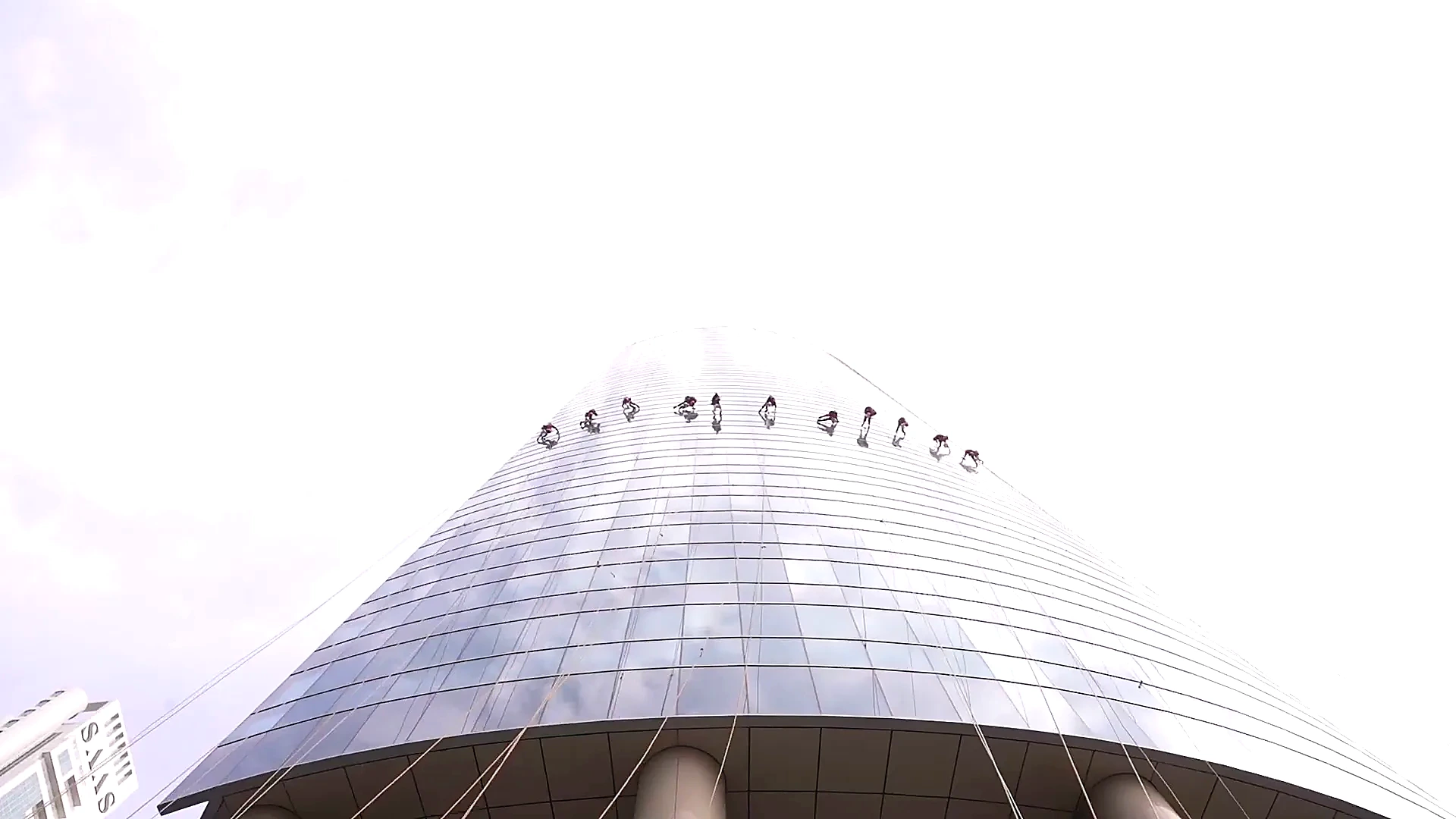
Yes. Most repairs, including re-sealing, gasket replacement and glass replacement, are done in place from outside using rope access, BMUs or cradles.
Does a curtain wall make a building hotter?
Modern coated double glazing controls solar heat well. Older single glazing or failed seals can increase heat gain.
FREE SITE INSPECTION
Problems with your curtain wall?
We inspect, re-seal and repair curtain walls on towers across Dubai. Message us on WhatsApp to arrange an inspection.